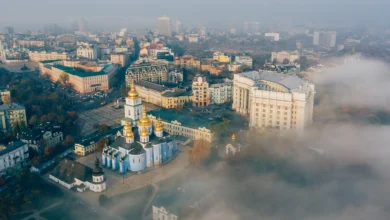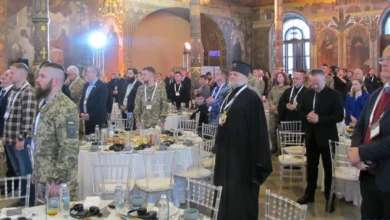
On December 22, 2025, in Kyiv, representatives of Christian civic organizations united within the Ukrainian Christian Movement issued a public appeal to the Ukrainian people, the international community, and all people of goodwill. In their statement, they expressed support for efforts to end the war, while emphasizing that peace for Ukraine must be just and based on international law, truth, and Christian values.
Peace as dignity, not merely a ceasefire
The statement stresses that peace cannot be reduced to the mere cessation of hostilities. From a Christian perspective, peace is a condition in which human dignity is respected, nations are free, and peoples retain their right to security, identity, and self-determination.
The authors underline that Ukrainians do not seek “peace at any cost,” but a peace that does not legitimize violence or reward aggression.
The rule of law versus the law of force
A central theme of the appeal is the affirmation of the rule of law over the rule of force. The Movement warns that peace imposed through coercion, territorial concessions, or the disregard of national sovereignty cannot be just or sustainable.
This principle, they note, is not only political but moral, rooted in the Christian understanding of justice, responsibility, and accountability.
The misuse of faith and the danger of the “Russian world” ideology
The statement gives particular attention to the abuse of Christian language to justify war. The ideology of the so-called “Russian world” is described as a distortion of the Gospel, where faith is replaced with political mythology and the sacralization of violence.
Such misuse of religion, the Movement warns, poses a threat not only to Ukraine but to global peace and security, as it undermines the foundations of peaceful coexistence among nations.
Twelve years of war: peace cannot come at any price
The authors remind readers that Ukraine has been living under conditions of war for twelve years, with the full-scale phase now in its fourth year. While Ukrainians long for the end of the war, this does not mean a willingness to sacrifice sovereignty, territorial integrity, or national identity.
Attempts to portray Ukraine’s resistance as “pointless” or “immature” are described as an insult to the memory of victims and to the suffering endured by millions.
An appeal to the international community
The Ukrainian Christian Movement calls on international partners not to succumb to the illusion of a “quick peace” achieved at the expense of justice. The appeal emphasizes the need for:
-
respect for the inviolability of international borders;
-
genuine protection of human rights;
-
rejection of imperial thinking and “spheres of influence”;
-
peace negotiations grounded in truth about aggression and war crimes.
The authors note that these principles are consistent with the positions of many global Christian institutions and churches.
A Christian vision: peace as the fruit of truth
From a Christian standpoint, the statement concludes, faith cannot be used to justify violence. Peace is the fruit of truth, responsibility, and repentance, not of compromise with evil.
Representatives of the Movement affirm that they will continue to pray, work, and act so that Ukraine may remain free, dignified, and just among the nations of the world.
SIGNATORIES:
From the Council of Christian Churches of Ukraine, – Chairman of the Council Anatoliy Kozachok
From the Ukrainian Association of Christian Educators, – Chairman of the organization Vitaliy Shulga
From the Interfaith Initiative Christians for Ukraine, – Yaroslav Lukasik
From the NGO Christian Rescue Service, – Chair of the organization Lyudmila Bogdashevskaya
From the NGO Civic Movement All Together!, – Chair of the organization Ruslan Kukharchuk
From the NGO Movement for Life and Human Dignity, – Chair of the organization Artur Pogorilenko
From the NGO “Center for Restoration and Development” – Head of the organization Oleksandr Volyanyk
From the NGO “Conciliar Patriarchal Society of St. Vladimir, Equal to the Apostles, Grand Prince of Kyiv” – Head of the Patriarchal Society Mykhailo Kanafotsky