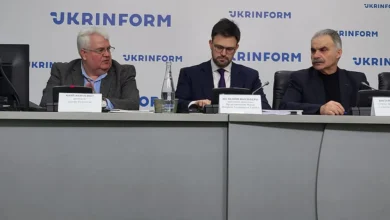
The Russian Orthodox Church in Europe is not an autonomous religious body but remains an integral part of the Russian Federation’s state apparatus, performing clear security, financial, and ideological functions. This was stated by Ukrainian military officer and public figure Viktor Yagun, commenting on revelations in Sweden regarding the activities of nuns linked to a Belarusian monastery.
Source: Facebook post by Viktor Yagun
The historical link between the Church and security services
According to Yagun, the use of the Russian Orthodox Church (ROC) as an instrument of state policy has a clearly traceable historical continuity.
The institutional alliance between the Church and security agencies was formalized as early as 1943, when Joseph Stalin restored the ROC as a controlled element of the Soviet system of mobilization, social control, and foreign influence. At different stages, this vertical structure was overseen by the NKVD and the KGB, and in today’s Russia by the FSB and the GRU.
In the expert’s assessment, only the rhetoric has changed — the underlying model of subordination of the Church to the security apparatus has remained intact.
How the modern influence model operates in Europe
Yagun outlines several key mechanisms through which the Russian Orthodox Church is used in European countries:
Religious cover. Parishes, monasteries, and so-called “humanitarian initiatives” enjoy a high level of public trust and legal protection in democratic states.
Financial channels. Donations and the trade in religious goods generate poorly monitored financial flows that can be redirected to support Russia’s war effort.
Ideological legitimization of war. Religious narratives of a “holy struggle” remove moral restraints, justify aggression, and undermine the effectiveness of sanctions.
Networks of influence. Through congregations and sympathizers, an environment is formed that can shape public opinion and influence political processes.
Why Europe remains vulnerable
According to the expert, the main problem facing European states is not a lack of information but inertia in perception. The Russian Orthodox Church is often viewed as an ordinary religious actor, while in reality it functions as part of Russia’s centralized state system.
This is why cases such as the recent Swedish investigation should not be treated as isolated criminal incidents. They are elements of a coordinated hybrid campaign aimed at destabilizing democratic societies.
Expert conclusion
Viktor Yagun emphasizes that the presence of the Russian Orthodox Church in Europe goes far beyond religious activity.
It involves intelligence gathering, financial operations, propaganda, and the preparation of a social environment conducive to destructive influence. The historical record since 1943 provides ample grounds to stop treating these activities as accidental deviations.